
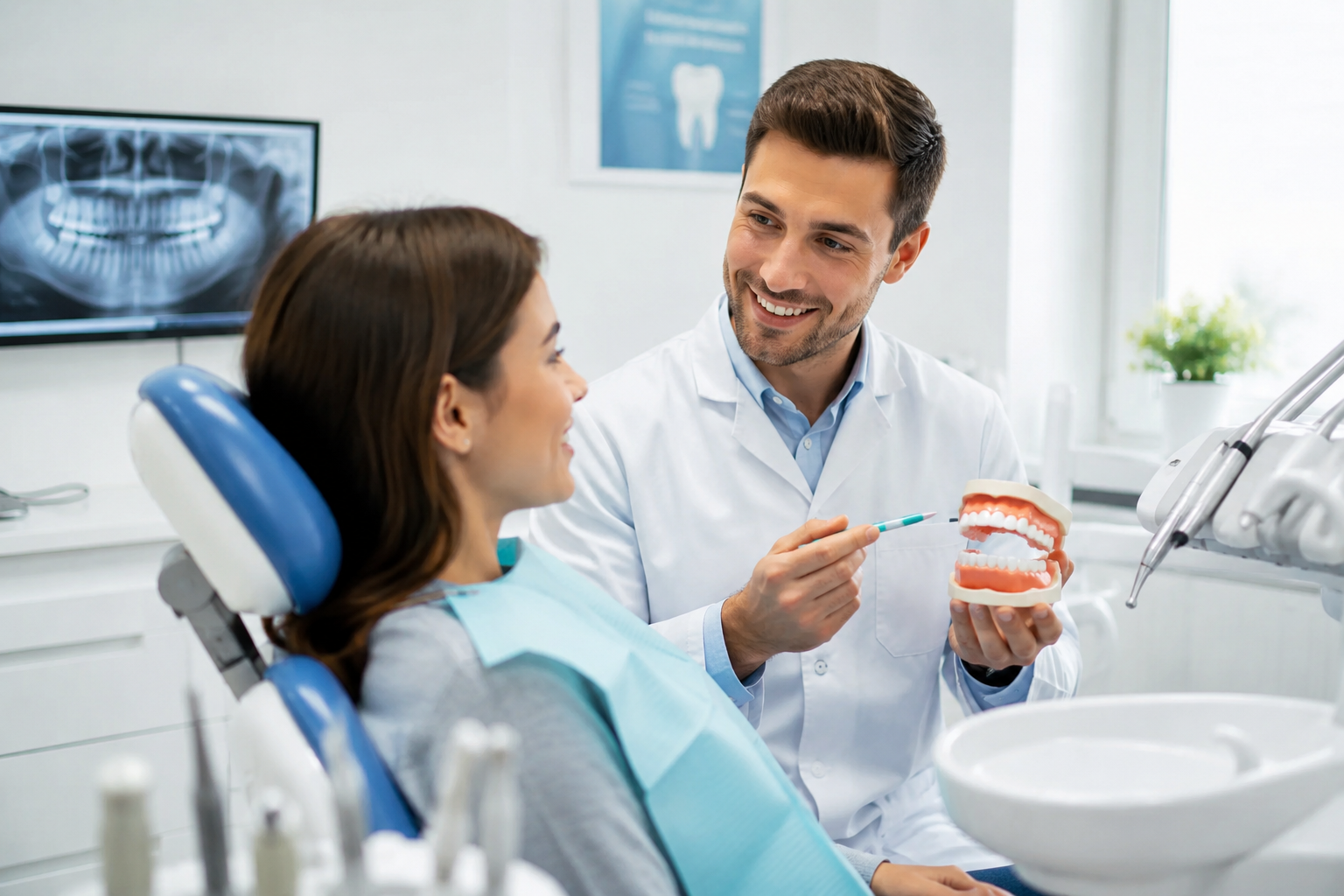
You’ll find your first dental visit in Fullerton feels organized and supportive, not scary. Staff will greet you, confirm your information, and explain what to expect so you can relax and focus on your oral health. You’ll leave knowing the state of your teeth and gums, a clear plan for any needed care, and practical tips to keep your smile healthy.
The dentist will discuss your medical and dental history, perform a thorough exam, and likely take X-rays or images to spot issues you can’t feel yet. A hygienist will clean your teeth and show personalized prevention tips, while the team outlines common findings and next steps so you know exactly what to expect.
Fullerton offices emphasize comfort and modern care, so providers will answer questions and adapt the visit to your needs. If you want a stress-free experience, look for practices that prioritize clear communication, gentle techniques, and easy follow-up for treatment or routine visits.
Welcoming Atmosphere at Fullerton Dental Offices
Fullerton dental offices focus on making patients feel safe, informed, and comfortable from the moment they arrive. Staff, environment, and individualized routines work together to reduce anxiety and streamline care.
Friendly Staff and Patient-Focused Care
Receptionists in Fullerton clinics typically greet patients by name, confirm appointment details, and review insurance or payment options in a private area if requested. Front-desk teams often offer electronic check-in and paperless forms to shorten wait times and limit paperwork.
Dental assistants and hygienists explain each step before starting treatment, from the cleaning process to what X-rays will show. They use plain language, demonstrate instruments when helpful, and invite questions to ensure understanding.
Dentists spend time on a brief medical and dental history, focusing on concerns such as sensitivity, past dental trauma, or cosmetic goals. They outline any recommended procedures, alternatives, and estimated costs, so patients can make informed choices without surprise bills.
Comfortable Waiting Areas
Waiting rooms in Fullerton offices commonly feature ergonomic seating, accessible layouts, and clear sightlines to the reception desk to improve safety and convenience. Many practices provide bottled water, current magazines, and charging ports for phones and tablets.
Child-friendly practices include a small play corner with sanitized toys and children’s books, plus early appointment slots for families to minimize disruption to school or work schedules. Quiet rooms or headphones can be available for patients who prefer a low-stimulation environment.
Offices often control lighting and temperature and use soft background music to reduce clinical feel. Clear signage for restrooms, payment stations, and exam rooms simplifies orientation for first-time visitors.
Personalized Approach to Dental Visits
Fullerton dentists tailor exams and treatment plans to each patient’s health history, lifestyle, and cosmetic preferences. For example, a patient with dry mouth receives targeted preventive measures, while someone interested in whitening hears about safe at-home and in-office options.
Clinics use digital records and imaging to show patients exact X-rays and intraoral photos during consultations. This visual approach helps patients understand conditions like early decay, gum recession, or alignment issues and supports shared decision-making.
Follow-up communication is routine: staff confirm prescription instructions, post-op care steps, and recall schedules by phone, text, or email based on patient preference. They also provide estimates and financing options before scheduling elective procedures, ensuring transparency and fewer surprises.
Patient Registration and Paperwork
Patients should expect to provide basic contact details, medical and dental history, and information about insurance or payment preferences. Completing forms before arrival speeds check-in and ensures the staff has accurate information for safe, personalized care.
Health History Forms
The office will ask patients to list current medications, allergies, chronic conditions (like diabetes or hypertension), and recent surgeries. They should note any heart murmurs, joint replacements, or pregnancy, since these can change treatment planning and infection-control precautions.
Patients should include past dental problems such as frequent cavities, gum disease, or sensitivity, plus dates of last X-rays and cleanings. If a patient uses nitrous oxide, inhalers, anticoagulants, or takes bisphosphonates, the team needs that detail to avoid complications.
Bring a completed form if the practice offers online intake; otherwise arrive 10–15 minutes early to fill it out. Accurate history helps the dentist choose appropriate X-rays, anesthetics, and preventive measures.
Insurance and Payment Options
Patients should bring their insurance card and a photo ID and know their plan’s primary dentist requirement, deductible, and co-pay amounts. The front desk will verify benefits and estimate patient responsibility for exams, X-rays, and cleanings.
For patients without dental insurance, practices in Fullerton often provide membership plans, sliding fees, or payment plans through third-party financing. Ask about accepted credit cards, HSA/FSA eligibility, and whether the office offers in-house discounts for new patients.
If treatment beyond a routine exam is recommended, the office typically provides a written estimate and prior-authorizes procedures when required. Clear cost information helps patients plan and avoid unexpected bills.
Consultation With Your Dentist
The dentist will review medical history, current symptoms, and the exam findings to create a clear plan. Patients should expect a focused conversation about immediate needs, recommended treatments, and next steps for prevention and comfort.
Addressing Your Questions and Concerns
The dentist asks specific questions about pain, sensitivity, previous dental work, and any medications that affect oral health. They will listen to patient concerns about appearance, anxiety about procedures, or trouble chewing, then respond with practical options rather than vague reassurances.
Expect clear explanations of why an issue exists — for example, explaining that sensitivity on cold may indicate enamel loss or a filling problem. The dentist often shows images or X-rays so patients can see cavities, bone levels, or restorations, which makes the rationale for treatment concrete.
They will outline immediate actions (pain relief, short-term repairs) and what can safely wait. If the patient has dental anxiety, the dentist discusses comfort measures like nitrous oxide, oral sedatives, or scheduling strategies to reduce stress.
Discussing Oral Health Goals
The dentist asks about the patient’s goals: wanting whiter teeth, fewer fillings, improved chewing, or maintaining natural teeth into older age. They translate those goals into measurable steps — for example, a two-month whitening plan, a hygiene-focused schedule with three-month cleanings, or a phased restorative timeline.
They present treatment options with pros, cons, costs, and timelines, using plain language and comparisons. For instance, explaining that a crown offers longer durability than a large filling but involves two appointments and higher cost.
The dentist creates a personalized prevention plan covering at-home care, recommended products (toothpaste with fluoride, interdental brushes), and recall intervals. They also set clear next steps: scheduling required procedures, providing written estimates, and offering contact information for questions or to arrange sedation or financial arrangements.
Comprehensive Oral Exam
The dentist conducts a thorough inspection to assess tooth health, gum condition, bite alignment, and signs of disease. They document findings, take required X-rays, and create a prioritized plan for treatment or prevention.
Checking Teeth and Gums
The hygienist or dentist visually inspects each tooth for decay, fractures, worn fillings, and new or returning dental work. They use a dental mirror and explorer to check along gumlines and between teeth where cavities often start.
Pocket depths around teeth are measured with a periodontal probe to evaluate gum attachment and detect early gum disease. Readings of 1–3 mm are healthy; 4 mm or more may prompt deeper cleaning or monitoring.
X-rays (bitewings, periapicals) are taken as needed to reveal cavities between teeth and bone loss not visible to the eye. The clinician explains what the images show and how that affects treatment choices.
The dentist also assesses bite and tooth wear patterns to identify grinding, misalignment, or braces needs. They note cosmetic concerns and outline options like fillings, crowns, or whitening based on the patient’s goals and budget.
Oral Cancer Screening
The clinician performs a visual and tactile exam of the lips, tongue, floor and roof of the mouth, cheeks, and throat. They look for persistent ulcers, white or red patches, lumps, or asymmetry that could signal abnormal tissue.
Palpation checks the underside of the tongue and neck for firm or enlarged lymph nodes. Any suspicious area is measured, documented, and photographed for comparison at follow-up visits.
If the exam finds concerning signs, the dentist recommends further steps: referral to an oral surgeon, biopsy, or adjunctive tests like fluorescence screening. They explain risks and next steps clearly and provide written information when needed.
Patients are advised to report persistent soreness, lumps, or patches that do not heal within two weeks. Smoking, heavy alcohol use, and HPV are discussed as risk factors, and practical prevention tips are offered.
Dental X-Rays and Imaging
Dental imaging helps the dentist see hidden problems, confirm diagnoses, and plan treatment precisely. Patients can expect quick, targeted images that guide fillings, root canals, implants, and routine checkups.
Why X-Rays Are Important
X-rays reveal cavities between teeth, bone loss from gum disease, impacted teeth, and the positions of roots and unerupted teeth. They let the dentist spot small problems early before pain or visible damage occurs, which often means simpler, less costly care.
For children, bitewing or panoramic images track tooth development and detect decay under enamel. For adults, periapical and bitewing images evaluate root health and check crowns, bridges, and previous treatments. Panoramic images show the whole jaw and sinus relationships useful for implants or wisdom-tooth planning.
Dentists use images to compare changes over time. That comparison helps tailor preventive care and decide when a restorative procedure is needed. Patients should bring past dental records or X-rays if they have them, to avoid duplicate imaging.
Modern, Low-Radiation Techniques
Fullerton practices commonly use digital X-rays that cut radiation exposure by up to 80–90% compared with older film systems. Digital sensors capture images instantly, reducing retakes and allowing the dentist to enlarge and enhance images on a screen for clearer explanations.
Cone beam CT (CBCT) scans are used selectively for complex cases, such as implant planning or evaluating jaw pathology. CBCT gives three-dimensional views while modern machines and protocols keep doses as low as reasonably achievable (ALARA). Lead aprons and thyroid collars provide additional protection when indicated.
Technicians follow strict guidelines — limiting fields of view, using the lowest exposure settings that yield diagnostic quality, and only imaging when clinically necessary. Patients can ask the front desk about specific radiation doses and whether prior images can be transferred to avoid repetition.
Professional Dental Cleaning
A professional cleaning removes stubborn buildup, polishes tooth surfaces, and helps catch early signs of gum disease. The visit usually takes 30–60 minutes and focuses on comfort and thoroughness.
Plaque and Tartar Removal
The hygienist first examines the mouth to identify areas with heavy plaque or tartar. They use an ultrasonic scaler that vibrates to break up hardened tartar, followed by hand instruments to gently scrape any remaining deposits along the gumline and between teeth. Patients may feel mild scraping or brief vibrations, but the team adjusts pressure and technique for sensitivity.
If pockets of bacteria or bleeding are found, the hygienist will measure pocket depths and may recommend more frequent cleanings or a non-surgical deep cleaning (scaling and root planing). Local anesthesia is sometimes offered for deeper work or sensitive patients. The hygienist documents problem areas and gives targeted home-care tips, such as flossing technique or interdental brushes for tight spaces.
Gentle Polishing for a Brighter Smile
After tartar removal, polishing smooths enamel and reduces future plaque buildup. A rotating rubber cup or brush with a mildly abrasive paste removes surface stains from coffee, tea, or smoking without damaging enamel when done correctly. Polishing feels like a vibrating, spinning motion and usually causes little to no discomfort.
Fluoride or desensitizing varnish may follow polishing for patients with sensitivity or high cavity risk. The hygienist will advise on toothpaste options and timing for eating or drinking after fluoride application. They will also show quick at-home steps to help keep the shine between visits, such as using a whitening toothpaste sparingly and avoiding stain-rich foods right after cleaning.
Personalized Prevention Tips
The dental team gives specific, practical steps to keep teeth and gums healthy between visits. Recommendations will focus on brushing and flossing techniques, product choices, and diet or habit changes that reduce risk for cavities and gum disease.
Oral Hygiene Recommendations
They assess brushing technique and recommend a routine tailored to the patient’s mouth. For most adults, this means brushing twice daily for two minutes with a soft-bristled brush and a fluoride toothpaste; electric brushes with timers can improve consistency. Demonstrations often show angling the brush 45 degrees toward the gumline, using short circular motions, and reaching all tooth surfaces.
Flossing instruction targets method and frequency. They advise daily interdental cleaning—traditional floss, floss picks, or interdental brushes depending on space between teeth—and show how to curve floss around each tooth to remove plaque gently without damaging gums. If implants, bridges, or braces are present, they suggest specialized tools like floss threaders, water flossers, or proxabrushes and provide a brief practice session to build confidence.
Diet and Lifestyle Guidance
They review dietary habits that affect oral health and suggest manageable changes. Cut back on frequent sugary snacks and sips of acidic drinks; swap soda or sports drinks for water and choose whole fruits over juice when possible. Recommend timing carbohydrate intake with meals to reduce prolonged acid exposure and suggest chewing sugar-free gum with xylitol after meals to stimulate saliva.
They address habits like tobacco use and alcohol that raise risk for gum disease and oral cancer. For smokers, offer cessation resources and explain how quitting improves healing and lowers staining. When medications cause dry mouth, they suggest saliva substitutes, frequent water sips, and sugar-free lozenges to protect enamel and reduce decay risk.
Common Findings and Next Steps
Most patients leave with a clear dental report, treatment priorities, and an appointment plan. The team will outline immediate needs, preventive steps, and options for comfort and financing.
Understanding Your Dental Report
The report lists fillings, decay, gum health, and any irregularities from X-rays and exam notes. It will state specifics like “3 mm pocket depth at lower left molar” or “incipient enamel lesion on tooth #8,” so the patient sees exact locations and severity.
Radiographs are labeled with tooth numbers and highlight problems not visible in the visual exam, such as interproximal decay or early root changes. The dentist marks recommended actions—monitor, restore, or refer—and explains why each option fits the patient’s oral health and lifestyle.
The hygienist often adds a periodontal chart and a home-care plan with concrete steps: frequency of flossing, targeted brushing technique, and recommended toothpaste or rinse. If cosmetic or elective work appears, the report separates those items and lists timeframes and cost estimates.
Scheduling Follow-Up Appointments
Follow-ups are set by priority: urgent pain or infection gets same-week slots, restorative work (fillings, crowns) within 1–4 weeks, and routine hygiene visits every 3–6 months. The front-desk staff coordinates needed imaging or specialist referrals before the next visit to avoid delays.
Patients receive appointment reminders and pre-visit instructions when necessary, such as fasting for IV sedation or bringing insurance cards. If treatment requires multiple visits, the practice provides a timeline and payment options—insurance estimates, in-house plans, and third-party financing—so patients know practical next steps.
For ongoing concerns like gum disease, the clinician schedules re-evaluation and communicates measurable goals (e.g., reduce pocket depths to ≤3 mm). They also offer contact details for questions or to report new symptoms between visits.
Making Your Visits Stress-Free
Patients learn how simple planning, clear communication, and available comfort options make dental visits easier. Small steps — telling the team about worries and choosing an appointment time that fits daily routines — often reduces stress immediately.
Coping With Dental Anxiety
Many patients feel nervous before a first visit; the dental team expects that and asks about specific fears during scheduling. Staff will note triggers such as gag reflex, needles, or fear of pain and adjust the plan accordingly.
Breathing techniques and guided imagery work well for mild anxiety and are taught chairside. For stronger anxiety, ask about oral sedatives taken before the appointment or nitrous oxide (“laughing gas”) administered and monitored in-office.
Clear, step-by-step explanations during examination reduce surprises. The dentist will describe each procedure before starting, show instruments when requested, and invite the patient to use a hand signal to pause at any time.
Comfort Options for Nervous Patients
Most Fullerton practices offer several comfort measures; patients should request options when booking. Typical choices include padded chairs, noise-cancelling headphones with music, and warm blankets.
Clinical comfort choices include topical numbing gel before injections and local anesthetic with modern, low-pressure syringes for gentler administration. For those preferring deeper relaxation, dentists provide nitrous oxide with fast recovery, or prescribe a mild oral sedative to be taken at home before the visit.
Patients should confirm insurance coverage or costs for sedation ahead of time. Bringing a trusted companion to sit in the operatory lobby or accompany the patient to and from the office is also helpful for post-sedation safety and emotional support.
Choosing the Right Dentist in Fullerton
They should look for a dentist whose practice emphasizes patient comfort and clear communication. Friendly staff, a calm office environment, and dentists who explain procedures in plain language help reduce anxiety.
Check credentials and experience, including dental school, continuing education, and any specialties. Modern training matters for treatments like implants, cosmetic work, and minimally invasive care.
Read reviews and ask neighbors or friends for recommendations. Reviews reveal patterns about punctuality, chairside manner, and how the office handles billing or insurance.
Verify that the office accepts the patient’s insurance and offers transparent pricing. Many practices provide a simple cost estimate before treatment and list financing or payment plans if needed.
Look for technology and hygiene practices that reflect up-to-date care. Digital X-rays, intraoral cameras, and strict sterilization protocols improve diagnostics and safety.
Consider accessibility and convenience: office hours, proximity to home or work, parking, and online scheduling. These practical details make it easier to keep regular visits and follow preventive care plans.
They should schedule a consultation or new-patient exam to assess rapport. A short visit helps determine whether the dentist listens, answers questions, and creates a comfortable treatment plan.
Encourage readers to call with questions or to book a first appointment when ready; most Fullerton offices welcome new patients and will guide them through insurance, forms, and what to expect at the initial visit.
Conclusion and Encouragement
They should feel reassured that a first dental visit in Fullerton, CA, focuses on comfort, clear communication, and understanding each patient’s needs. The team will listen, explain options plainly, and tailor care to individual concerns.
Patients can expect practical steps that make future visits easier: routine cleanings, simple X-rays if needed, and a clear plan for any follow-up. These steps help prevent problems and keep dental health manageable.
If anxiety is present, the staff will offer calming measures and explain each procedure before it happens. Small comforts—short breaks, headphones, or a trusted support person—can make a big difference.
For those with limited time, many offices provide flexible scheduling and efficient visits that still prioritize thorough care. Modern technology often shortens appointments without compromising quality.
Encourage next steps by contacting the office to book a visit or ask about payment options, insurance, and what to bring. They welcome questions and will help patients feel prepared and confident about their dental health.
Frequently Asked Questions
This section answers common concerns about what to expect at a first dental visit in Fullerton, CA, including the exam steps, imaging, how cavities and gum disease are detected, extraoral checks, and two simple home-care rules that help prevent problems.
What happens during a first-time dental exam, step by step?
The visit begins with registration and a review of medical and dental history to note medications, allergies, and past treatments.
A hygienist usually takes vital signs and performs a professional cleaning or removes plaque and tartar to let the dentist see healthy surfaces.
The dentist performs a visual exam of teeth, gums, bite alignment, restorations, and oral soft tissues.
They document findings, discuss any symptoms or concerns, and create a treatment plan with options, costs, and timelines.
If needed, the dentist schedules or performs X-rays and other scans, and may take intraoral photos for records.
They finish by explaining next steps, offering home-care tips, and arranging follow-up visits or specialist referrals.
Will I need dental X-rays at my first visit, and are they safe?
X-rays are often recommended at the first visit if there’s no recent imaging on file or if the dentist needs a clearer view of roots, bone levels, or unerupted teeth.
Digital X-rays are fast and use very low radiation—typically a fraction of daily background exposure.
The office will take a medical history and limit images to what’s necessary for diagnosis.
Lead aprons and thyroid collars further reduce exposure for extra protection.
How do dentists check for cavities and gum disease during an initial appointment?
Dentists use a visual inspection with good lighting and magnification to spot discoloration, pits, and soft spots on tooth surfaces.
They use dental instruments like explorers to gently test suspicious areas for softness or stickiness.
For gum disease, they measure pocket depths around teeth with a periodontal probe to assess attachment loss and inflammation.
Bleeding on probing, recession, and bone loss on X-rays help determine the stage and required treatment.
Do dentists examine areas beyond teeth—like the tongue, throat, or tonsils—and why?
Yes. The dentist inspects the tongue, cheeks, floor and roof of the mouth, throat, and neck for sores, swelling, white or red patches, and asymmetry.
These checks screen for infections, oral cancer signs, and other medical conditions that can manifest in the mouth.
If anything unusual appears, the dentist documents it, may take photos or a biopsy, and refers to an ENT or oral surgeon when appropriate.
Routine extraoral exams support overall health and can catch non-dental problems early.
What is the 3-3-3 rule in dentistry, and how does it affect my daily brushing and flossing?
The 3-3-3 rule recommends brushing three minutes total, three times per day, and flossing three times per week as a simple guideline.
This variation emphasizes consistent mechanical removal of plaque while recognizing realistic routines for busy people.
Dental professionals often modify the rule: they encourage twice-daily brushing for two minutes plus daily flossing for best cavity and gum disease prevention.
For patients with higher risk, the dentist may advise additional tools like interdental brushes, powered toothbrushes, or antimicrobial rinses.
What does the 50-40-30 rule mean in dentistry, and how can it help me prevent problems long-term?
The 50-40-30 rule divides preventive focus into percentages: 50% daily home care, 40% professional dental cleanings and check-ups, and 30% lifestyle factors like diet and smoking cessation.
This framework highlights that consistent home care does most of the work, while professional maintenance and healthy habits significantly reduce long-term risk.
Applying the rule means committing to effective brushing and flossing, attending scheduled cleanings, and reducing sugary or acidic foods.
Dentists use this approach to tailor prevention plans and set realistic, evidence-based goals with patients.